




Europe
Africa
%20(1).avif)


Too many B2B brands fall into the trap of believing that publishing an episode on Spotify or Apple Podcasts is enough.
But in 2026, the noise online is infinite and discoverability doesn’t happen by accident.
There are millions of podcasts competing for attention, and unless you’re backing your show with a clear distribution and amplification strategy, even the smartest ideas disappear into the endless information.
That’s why production and distribution can’t be treated as separate disciplines.
Your podcast is content engine and every episode is a strategic asset.
“We see so many brilliant brands investing heavily in podcast production, but only a fraction put the same energy into distribution. A podcast isn’t a finished product when it’s recorded; it’s a launchpad. Without a plan to get it seen, even the best ideas die in silence.”
— Luke Barnett - Founder LRB
Podcast distribution is about building systems that make your ideas visible, repeatable, and scalable.
Its impact is ultimately shaped by three structural pillars: audience, format, and consistency.
When it comes to targeting an audience, it’s important to bear in mind they are not only defined by who they are on paper, but also where they actually spend their time and attention. Understanding this determines how and where your ideas enter their world.
Format shapes how your thinking travels. The same core insight must be translated and adapted across platforms so it remains coherent while fitting the logic of each environment.
Consistency is what sustains visibility over time. Showing up regularly and reliably enough is how to build familiarity, recognition, and ultimately, trust.
Every platform has its own rhythm and reward system.
That’s why smart distribution is about precision, not presence everywhere.
YouTube is often an afterthought for podcasts. This would be missing out on the biggest discovery engine.
It’s the one platform where people actively search for ideas, stories, and expertise. Moreover, the algorithm rewards consistency and watch time.
For B2B brands, YouTube is the bridge between visibility and credibility.
When optimized properly; with keyword-driven titles, engaging thumbnails, timestamps, and SEO-aligned descriptions, it becomes one of the most powerful growth levers for your podcast.
Think beyond simply uploading the video and consider how the episode is positioned to perform in search, how the title creates a clear reason to click, and how the thumbnail, title, and opening seconds work together to capture attention immediately.
This alignment is what transforms a passive view into something more meaningful: a viewer who chooses to subscribe and actively engage with your brand.
A strong podcast distribution strategy multiplies the impact of a single episode by extending its life far beyond the original recording. Each conversation becomes a source of multiple entry points, translated into formats that meet audiences where they already are.
The core theme can evolve into a written piece that captures and structures the ideas in a more reflective format. Key moments from the discussion can be distilled into short-form clips designed for platforms like LinkedIn, YouTube Shorts, and TikTok, while standout insights can be reframed as visual quotes or carousel posts that invite slower, more considered engagement.
At the same time, the conversation can be brought directly into inboxes through newsletter excerpts or email content, reinforcing proximity with your audience. In parallel, both video and audio versions should be optimized for discoverability, ensuring the episode continues to surface over time rather than fading after publication.
When executed thoughtfully, a single 45-minute conversation can sustain an entire month of content across the channels your audience actually uses.
“Every episode is a micro-campaign that deserves multi-channel oxygen.” - Ivana Heijnen
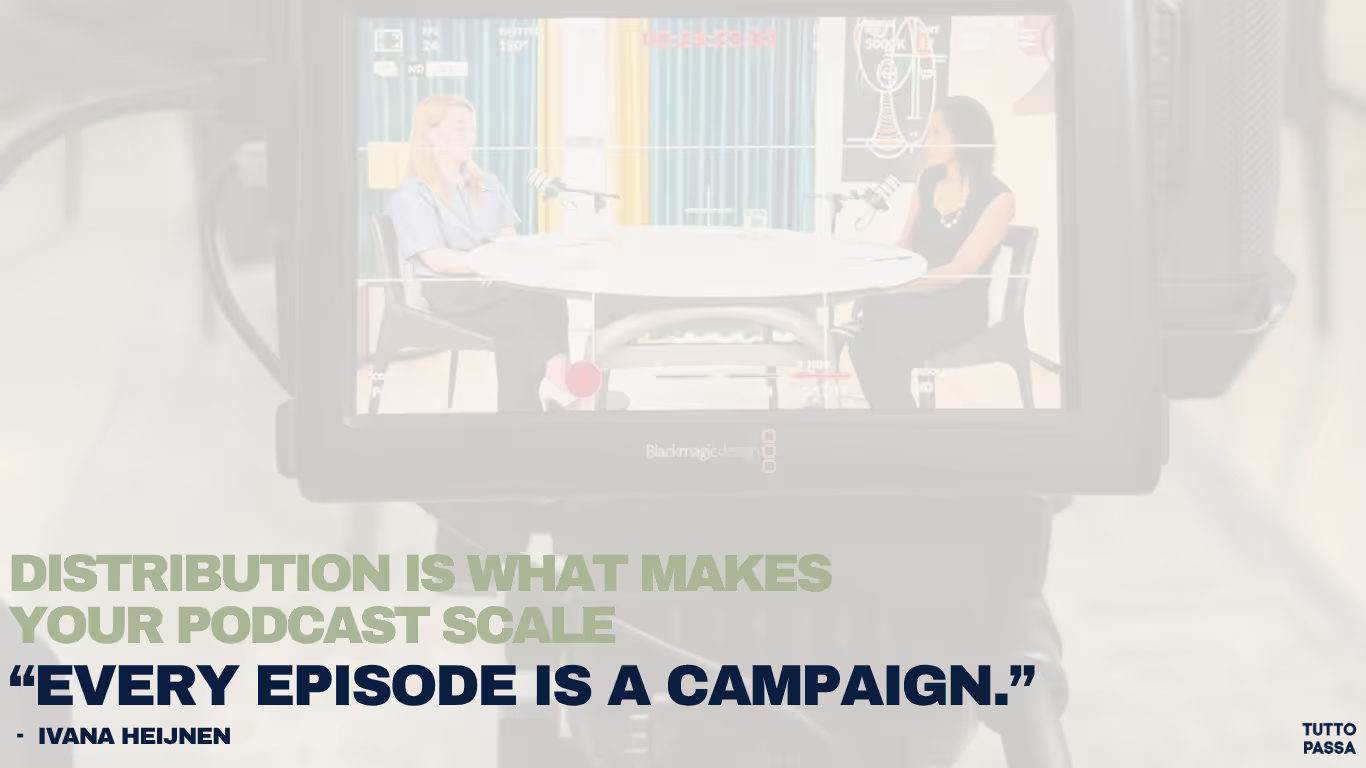
Distribution doesn’t end when you hit “publish.”
The ending point should come when you can prove your podcast is driving visibility, engagement, and brand growth.
That’s where performance tracking, views, listens, retention, shares, and audience growth go beyond reporting and become part of the creative process.
Testing titles, thumbnails, and publishing times across YouTube and podcast platforms should be an ongoing habit. It’s how your distribution strategy evolves from guesswork to data-backed growth.
“Treat your analytics dashboard like your editor, it tells you what stories are resonating.” - Ivana Heijnen
The brands winning with podcasts today are running integrated systems on top of telling great stories.
The podcast sits at the center of their content ecosystem.The distribution strategy bridges storytelling and social amplification.Every episode is like a campaign. Your podcast is only as strong as your distribution strategy. And if you get that right, it stops being content to become a true growth channel.


.png)


.avif)