%20(1).avif)


Europe
Africa
The missing infrastructure
Innovation ecosystems are often evaluated through tangible indicators: funding raised, startups launched, technologies developed, policy introduced or exits achieved. Although these are essential measures of progress, they don’t explain why some ecosystems become globally recognised while others, despite comparable activity, remain overlooked.
As ecosystems grow in complexity, they face a new challenge: making that complexity legible to founders, investors, policymakers, institutions and the wider market.
Communication, in this context, becomes infrastructure.
How we see storytelling at Tutto Passa
Most innovation activity is fragmented by nature. A founder closes a round. An investor writes a thesis. A policymaker publishes a framework. An institution hosts an event. Each of these is a signal. In isolation, a signal tells the market very little about what is actually happening, why it matters, or where things are heading. Storytelling is the discipline of connecting those signals into something a founder, an investor, or an institution can use to make a decision.
In this series, we explore how structured communication contributes to ecosystem development across industries and regions. We start with a case study close to home: our collaboration with Vincent Kuiper, Founding Partner at GOTA Ventures.
The GOTA Ventures case study
Vincent Kuiper co-leads GOTA Ventures, a global angel syndicate investing in early-stage FoodTech and consumer brands. Over the course of our collaboration, we worked with Vincent on two things in parallel: consistent, structured LinkedIn positioning & outreach, and a strategic authority-building asset in the form of a whitepaper.
For an early stage investor, visibility functions as an input rather than an end in itself. It drives inbound dealflow, brings him into contact with co investors and potential LPs, and grows the syndicate. Over six months, the visibility results were measurable: Over that period, connections grew by 81%, followers by 118%, profile viewers by 210%, and cumulative average post reach by more than 1,000%.
These numbers are useful. They are also the easy part to measure.
The more important question is what that visibility actually translated into strategically. That is what we wanted to understand directly from Vincent.
The FoodTech context
FoodTech is an ecosystem where credibility compounds slowly.
Unlike many software sectors, technological complexity is high, adoption cycles are long, regulation shapes commercial timelines, and operational realities often sit behind ambitious narratives. For much of the past decade, the industry was driven by future visions, rapid capital deployment, and bold promises. Today, it is entering a more disciplined phase.
The conversation is shifting:
- from hype to execution;
- from disruption to integration;
- from visibility to viability.
In moments like these, ecosystems need trusted voices who can translate complexity into clarity. That is where structured communication moves beyond marketing. It becomes part of the ecosystem's infrastructure, helping founders, investors, corporates and policymakers collectively make sense of what is changing.
Against that backdrop, Vincent's experience illustrates what happens when consistent positioning evolves into recognised expertise.
From visibility to credibility: Vincent's reflection
We asked Vincent how the increased visibility and more structured positioning actually translated into conversations, opportunities, and ecosystem credibility. His answer is worth reading in full, because it shows something storytelling frameworks tend to describe in theory and rarely show in practice.
"The biggest change was in the kind of conversations I started having. At the start, visibility mostly meant people knew Gota existed. As the content became more consistent and the analysis sharper, the inbound changed. Founders began reaching out because they had read something I wrote and wanted my view on their category. The tone shifted from cold pitching to genuine conversation, and operators and other investors started engaging more seriously as well.
The whitepaper also shifted things in an unexpected way. A LinkedIn post builds recognition and is quickly forgotten. The whitepaper gave me a durable asset. When I meet someone in the ecosystem now, they already understand how I think about food investing because they have read the work. It effectively compressed months of relationship building into a single reference point.
Some of this also translated into unpredicted opportunities. I was invited to speak at the Argentinian Embassy on early-stage food innovation and collaboration between LatAm and Europe, at a large FoodTech event in Valencia, where the whitepaper was the direct reason for the invitation, and at the Delamar Theatre in Amsterdam about my journey with Gota and the future of food industry innovation. Visibility opens the door. You still have to build the relationship from there. Those doors were closed a year ago.
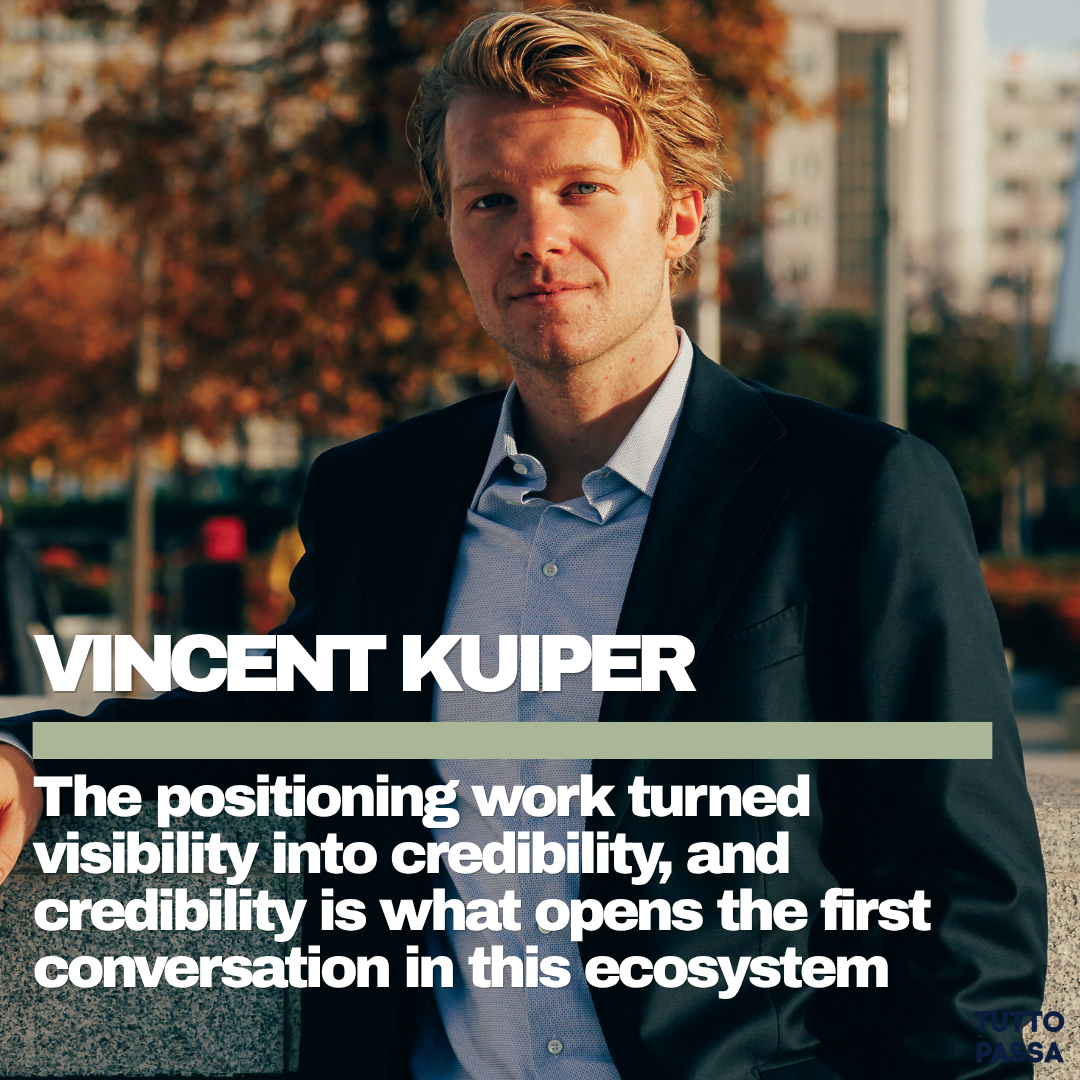
I still see myself as learning in public. The positioning work turned visibility into credibility, and credibility is what opens the first conversation in this ecosystem."
The pattern
What the GOTA case shows is that structured, sustained storytelling compounds into credibility in a way that individual posts or one-off press moments cannot.
A whitepaper informs and it pre-positions every future conversation. Consistent positioning builds an audience and it changes who reaches out, and why.
For ecosystems as a whole, the implication holds at scale. The ones that become legible to capital, to talent, and to policy are the ones that treat communication as infrastructure they deliberately build.
That is the thesis this series will continue to test.


.avif)