%20(1).avif)






Europe
Africa
What Spring Valley Coffee's story says about Kenya's changing coffee ecosystem
For decades, Kenya's relationship with coffee was largely defined by what happened after it left the country.
The coffee was grown here, processed here, and then shipped abroad. Often green, always before roasting, branding and final consumer experience that all happened somewhere else. The world's best Kenyan coffees could be found in London, Berlin, Amsterdam, New York or Tokyo. Not in Nairobi.
That's been changing since 2018, and not only in how the coffee is produced or sold but in who gets to experience it, build something around it, and keep a share of the value it creates. Nairobi is one of the places where that shift is easiest to see.
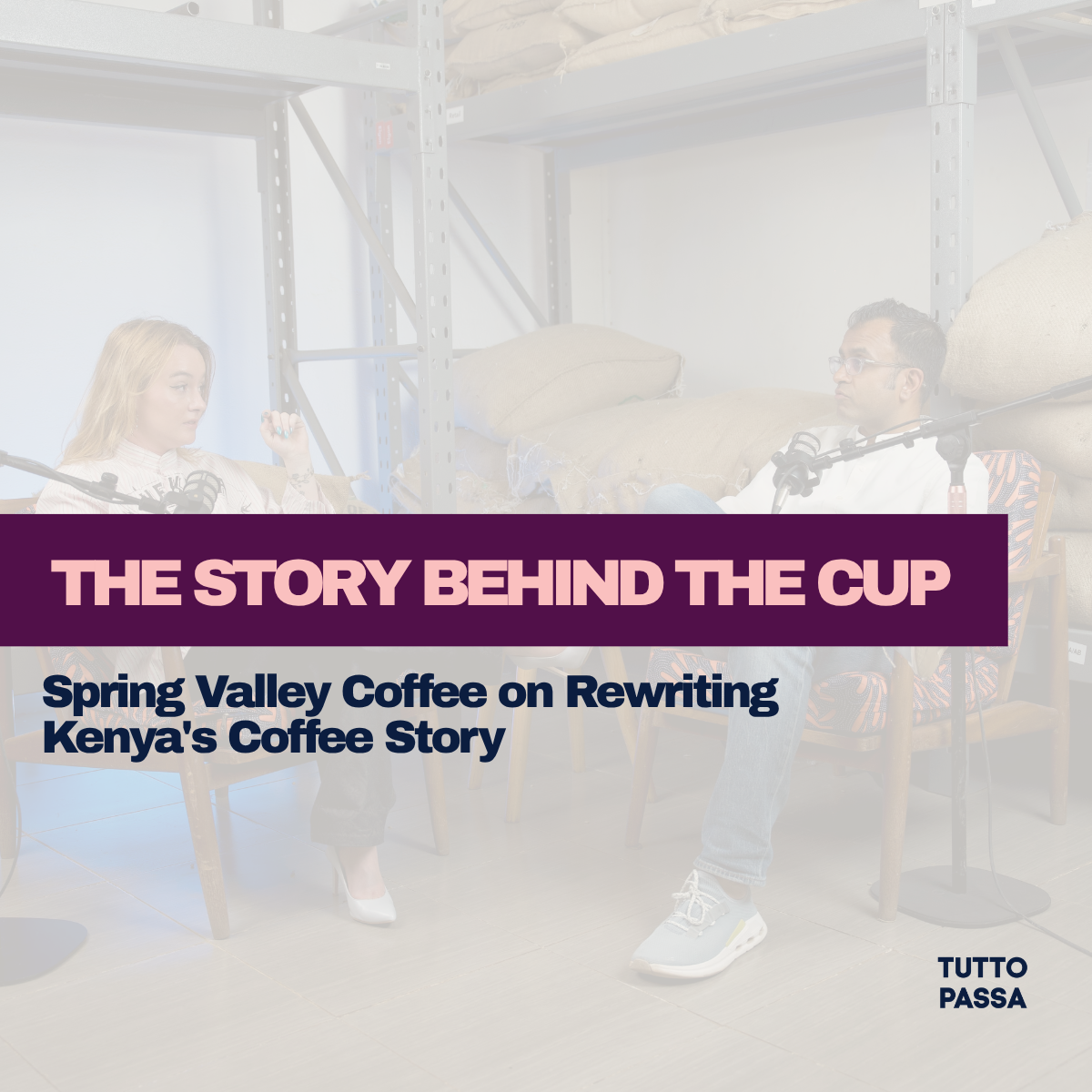
In episode 1 of Voices & Visions, Ritesh Doshi, CEO of Spring Valley Coffee, traces that change from farm to cup. And, in doing so, reveals a broader story about what happens when an ecosystem starts reclaiming its own narrative.
From export to experience
The numbers still favour the old pattern. Around 93–95% of Kenyan coffee still leaves the country green, with most of its value added somewhere else.
But the domestic market is changing.
When Doshi entered the coffee business in 2018, brewed coffee accounted for only around 1% of beverages consumed in Kenya. Since then, he has watched coffee move beyond the expat and internationally exposed consumer base and become increasingly part of everyday Kenyan life.
As he puts it:
“Why is the best stuff being exported? I'm Kenyan, I want to drink the best coffee at home.”
That question is bigger than coffee. Underneath it is something closer to: does producing something give you a claim on the value it creates, or does that value default to wherever the story happens to get finished?
A value chain is also a story
Coffee is not a single product. It is a chain of farmers, cooperatives, mills, brokers, roasters, cafés and consumers. And every step shapes what eventually reaches the cup.
Kenya's auction system is transparent on price, but Doshi points to what transparency alone doesn't fix: a gap between harvest and payment that can stretch to more than 180 days, and value that can be lost along the chain.
For specialty coffee, traceability changes that story. Better traceability can mean better prices for farmers and greater care in how coffee is processed. The result of that is a more visible connection between the person who grows the coffee and the person who drinks it.
That connection matters because Kenya's coffee story has historically been told from the outside. The country's best beans could acquire their premium reputation thousands of kilometres away, while the people producing them remained largely invisible to the final consumer.
The emerging coffee ecosystem is beginning to tell a different story: origin doesn't have to be the beginning of the value chain. It should be part of the value captured at the point of consumption too.
Building a coffee culture at origin
The change isn't only commercial. Coffee is becoming social infrastructure.
Doshi describes cafes as places where Kenyans meet, conduct business, hold interviews, work, and, in his words, “catalyse connections.”
The ecosystem is expanding around that culture. Spring Valley Coffee's Nairobi cafes sit alongside other Kenyan brands, artists and makers, creating spaces that showcase more than coffee. When the company opened in London, the ambition was to carry a wider story and build a platform for Kenyan and African brands alongside it.
Not just coffee from Kenya, but Kenya through coffee.
A different kind of premium
Perhaps the most revealing part of Doshi's story is his resistance to the word premium.
“I don't like to use the term premium,” he says, “because the ambition is for incredible coffee to be accessible”.
That distinction matters. A mature ecosystem doesn't necessarily become valuable by becoming exclusive. It becomes valuable by making its quality legible to its own consumers, investors, international markets and to the people participating in the value chain.
Kenya's coffee story is still unfinished. But it is becoming increasingly clear that the next chapter won't simply be about growing great coffee.
It will be about owning more of the story around it.
“We don't need any favours. What we want is just opportunities that create a level playing field.” - Ritesh Doshi
And perhaps that is the bigger lesson from Nairobi's coffee ecosystem: the story of an origin becomes more powerful when the people at the origin get to tell it themselves.


.avif)