%20(1).avif)




Europe
Africa
A founder closes a round. A fund manager writes a thesis. A journalist files a story that never made it past the regional desk. Each of these is a signal that something real is happening. Taken alone, none of them tell you what a place actually is, or why it works the way it does.
Nairobi is a useful place to watch this play out. It has one of the continent's most active private equity and venture markets, a mobile-money system other countries study as a model, and a specialty coffee industry competing on its own terms globally. Yet the version of Nairobi that circulates internationally is still, more often than not, a decade or two out of date.
The interesting question, then, isn't whether Nairobi is a mature ecosystem or an emerging market.
It is: what does Nairobi actually look like when you listen to the people operating inside it?
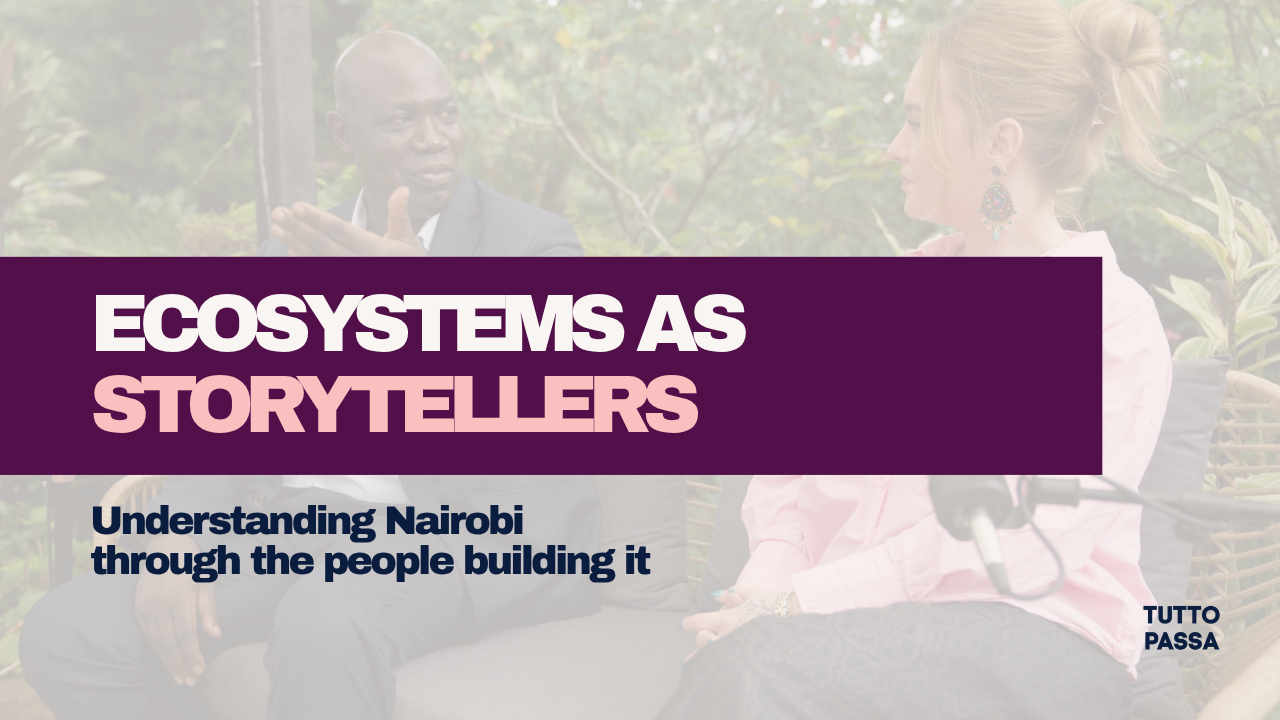
Over the past year, Tutto Passa has been doing exactly that through Voices & Visions, recording conversations with founders, investors, operators and institutional builders across Nairobi.
Taken together, these conversations reveal something about the mechanisms underneath the headlines.
An ecosystem is more than its startups
The international story about African ecosystems often starts with companies. Which startup raised the biggest round? Which fund entered the market? Which founder is expanding across the continent?
Those are useful signals. But a functioning ecosystem is made up of the relationships between its parts. That becomes particularly visible in Nairobi's financial infrastructure.
When Andrew Mutha and Peter Gichangi of Safaricom talk about M-Pesa, they aren't really describing a mobile-money product anymore. They are describing infrastructure that has become embedded across the economy, connected to banks, businesses and financial services.
“We move a third of the GDP on this infrastructure.” - Peter Gichangi
The story is that an innovation became infrastructure, and that infrastructure changed what other institutions could build around it.
Nairobi's advantage is also its connections
George Odo, Senior Partner at AfricInvest, describes Nairobi in similarly structural terms.
The city has become a regional hub not only because of the businesses headquartered there, but because of its ability to bring together capital, talent and institutions. He points to Nairobi's “convening power” as a defining feature of its ecosystem.
Ecosystems are partly physical. People need somewhere to meet. Investors need somewhere to develop relationships. Founders need access to expertise. Ideas need to move between sectors.
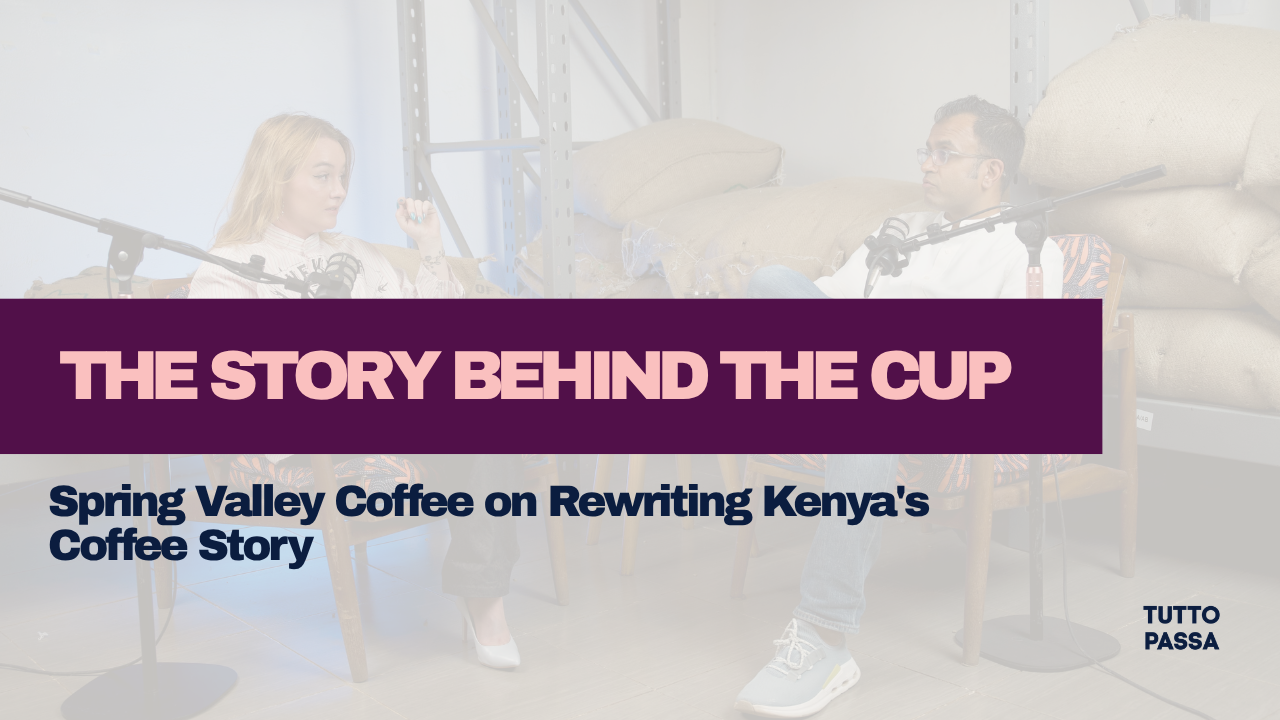
Ritesh Doshi of Spring Valley Coffee describes cafes as places where Nairobi's business relationships happen in practice; meetings, interviews, informal work sessions and conversations where people “capitalize connections.”
Not every important transaction happens in a boardroom.
Maturity isn't the absence of problems
Perhaps the most important distinction in understanding Nairobi is this: a mature ecosystem is not one where everything works. It is one where people understand the problems well enough to start building around them.
Francis Nasyomba of Raisin Capital and Capital Connect describes another part of the challenge: capital alone isn't enough. Businesses need to be ready for investment, find the right investor, align expectations and structure the deal properly.
These are signs of an ecosystem becoming more precise about what it needs.
Markets are built, not discovered
Victor Ndiege, CEO of Kenya Climate Ventures, makes this point from an investor's perspective. Discussing impact investing, he describes market development as a process of consistent engagement, support and involvement rather than simply identifying businesses and deploying capital.
“Winning is a process,” he says.
That idea extends beyond climate investing. Nairobi's ecosystem has not been created by one wave of venture capital arriving from elsewhere. It is the cumulative result of entrepreneurs, investors, institutions, infrastructure and communities repeatedly interacting.
Markets are built through repetition. Ecosystems are built through relationships.
And then there is the story
This is where narrative matters.
Because a market that cannot explain itself is harder to understand, harder to navigate and easier to misprice.
Adonijah Ndege, a senior reporter at TechCabal, speaks to this from the media side. The stories circulating about a market influence where attention goes, and attention influences where capital and opportunity can follow.
The problem becomes particularly acute when an entire continent gets compressed into a handful of familiar narratives.
Ndege points out the danger of approaching Africa as though it were one market, when the realities of language, regulation, consumer behaviour and institutions differ substantially across countries.
The answer is more specific stories. Stories that explain why a business works here, why an investor behaves differently here, why a product that looks familiar elsewhere functions differently in Nairobi.
That is where narrative becomes part of ecosystem infrastructure: it makes the system legible.
Nairobi doesn't need one story
Perhaps the strongest message to emerge from these conversations is that there is no single Nairobi story.
There is the Nairobi of venture capital and private equity.
The Nairobi of M-Pesa and financial infrastructure.
The Nairobi of climate finance, coffee and consumer businesses.
The Nairobi of informal businesses and entrepreneurs solving problems without waiting for perfect infrastructure.
And the Nairobi of contradictions.
“Kenya is a land of so many contradictions, but also a place defined by positive energy and resilience.” - Andonijah Ndege
That tension isn't a flaw in the story. It is the story.
An ecosystem can be advanced and unfinished at the same time. In fact, that may be what ecosystem development looks like in practice.
Watch the whole season on Youtube
.jpg)


.avif)